
1. Make one real activity your minimum entry
Requiring a long note and several measurements can make a busy day feel unsuitable for logging. Try a smaller rule: write the name of one activity you actually did. “Walking” or “Stretching” can be enough to recognize the day later.
Use a brief version on busy days and add detail when it is useful. This is a rule for writing records, not an exercise plan. A day without a workout does not need a workout entry.
2. Attach logging to something you already do
Choose a familiar moment, such as putting away your gym bag or arriving home from a walk. A specific cue gives you a place for the entry without deciding when to write it each time.
If that moment rarely works, try reviewing the day in the evening. Select the actual workout date. Daily Body lets you leave the time blank when you do not remember it, so there is no need to invent a precise time.
3. Reuse phrases you type often
Daily Body lets you select recent workout keywords or keep frequently used ones in favorites. Recent titles can also be reused for recurring contexts such as “After-work workout.”
Check the details before reusing them. If an earlier keyword says “Walking 30 min” but today’s walk lasted 15 minutes, update it. Select only the activities that belong in today’s entry.
- Choose familiar names for recurring activities.
- Select today’s activities from recent or favorite keywords.
- Update durations and repetitions that have changed.
4. Write today’s entry before filling the gaps
You can restart before reconstructing a missing week. Log today first, then add older entries only when you clearly remember what happened. Guessing missing activities makes the journal less useful later.
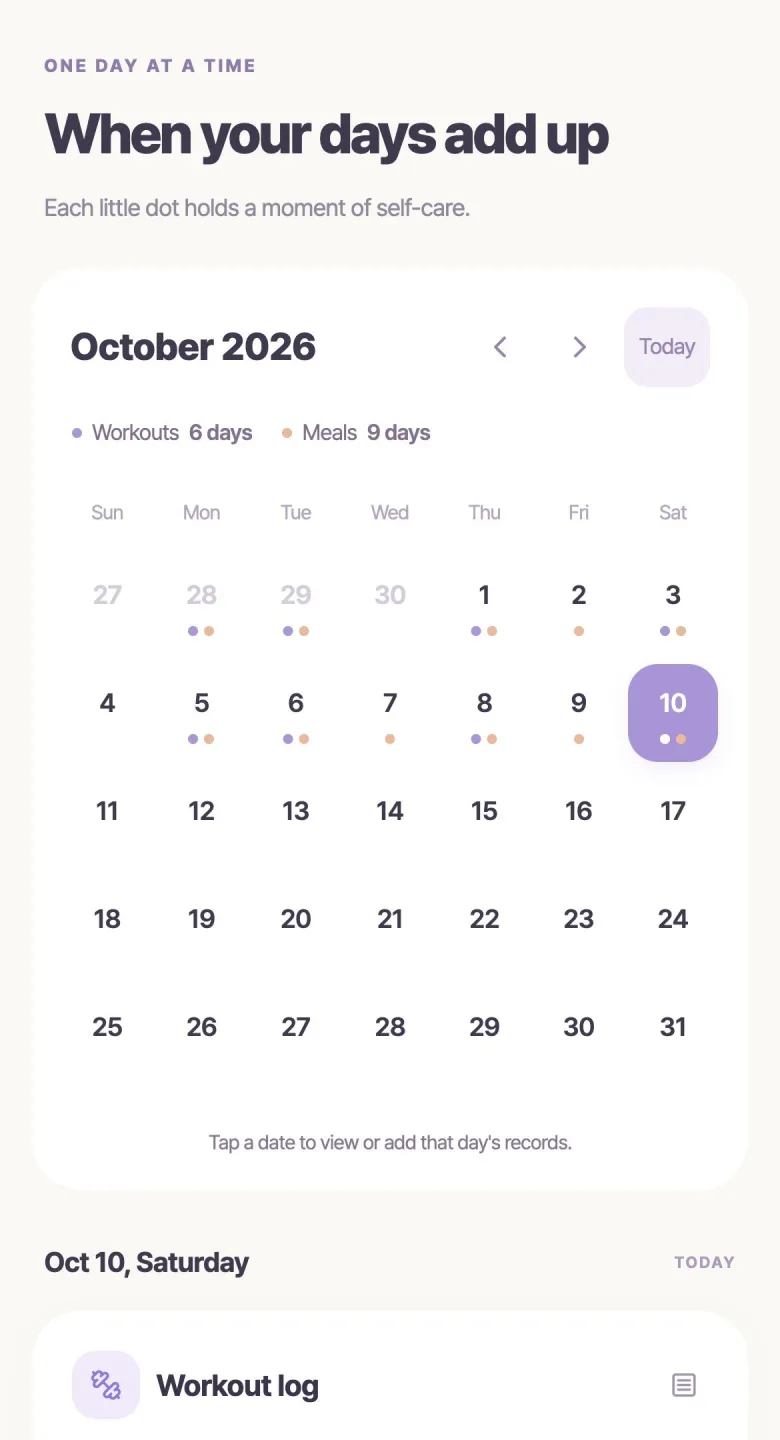
A blank calendar date may mean no workout or simply no record. Keep those possibilities separate during a review. A broken streak does not prevent you from adding today’s entry to the records already there.
5. Give yourself a reason to revisit your records
Look at the days you logged rather than only the blank ones. In Daily Body, a weight-only day also contributes to accumulated days and streaks, so those totals should not be read as workout-day totals.
Badges mark accumulated records. My Room lets you use credits earned through eligible logging to choose houses, furniture, characters, and pets. Items have credit and level requirements, and rewards have eligibility conditions; check the app’s guidance. Enjoy a visit to your room after a real entry instead of creating extra entries for rewards.
Make it easy to return with Daily Body
Daily Body brings short keyword entries, reusable recent items, and a calendar together. Badges and My Room offer ways to revisit what you have recorded. You do not need all five changes at once: remove one cumbersome step and choose one familiar moment for the next entry.