
Key Takeaways
- Food logs become more useful when they reveal frequently repeated meals and snacks, not just one day's numbers.
- Sort frequent foods into habits to keep, adjust, or complete with something that is missing.
- Use MealLog's meal report to choose one realistic change for your next review period.
You logged your meals. What should you change?
A food diary can become a collection of notes if you never review it. You may remember yesterday's dinner, but it is much harder to name the meals and snacks you repeated most often over several weeks.
A meal report turns those entries into a visible pattern. Instead of judging one meal or chasing a perfect calorie number, you can see the foods that form your real routine and decide what deserves attention first.
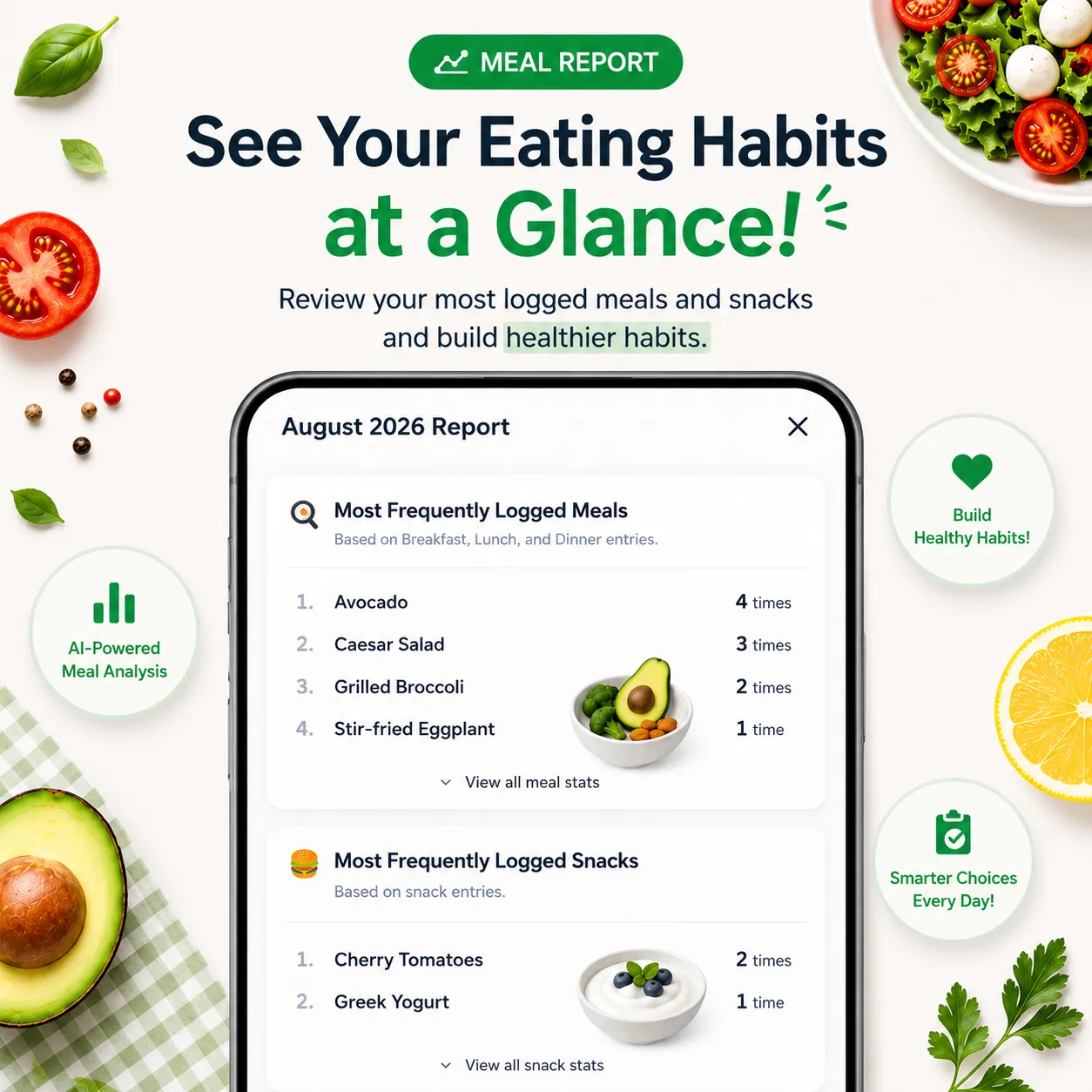
1. Frequent foods are the defaults in your routine
A one-off restaurant meal says less about your habits than the breakfast, lunch, or dinner you repeat. Start by noticing your defaults without labeling them good or bad. The goal is to understand what your schedule makes easy to eat.
2. Review meals and snacks separately
Meals are easier to remember than drinks, afternoon snacks, or late-night bites. Looking at snacks separately can reveal a repeated craving or time of day that was invisible when you only considered main meals.
3. Keep, adjust, or complete the pattern
- Keep: Continue foods and routines that already support your goal.
- Adjust: Set a realistic frequency or portion for something you want less often.
- Complete: Add what a frequent meal is missing, such as protein at breakfast or vegetables with noodles.
4. Choose one change for the next review
Trying to change breakfast, snacks, water, and late-night eating at once is difficult to sustain. Choose one observable action, such as adding fruit to two weekday snacks. At your next review, check whether that pattern actually changed.
Turn food records into healthier habits with MealLog
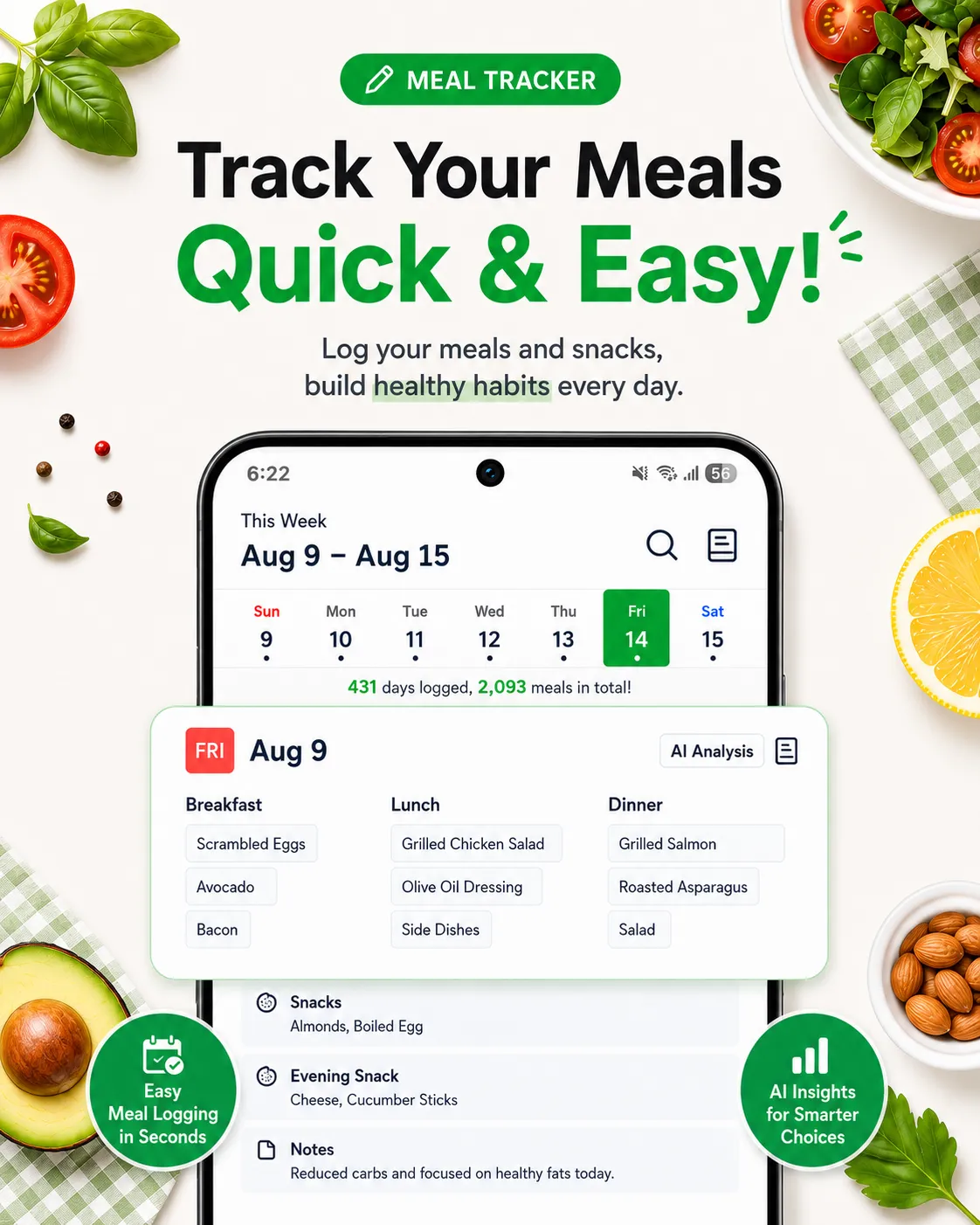
Useful reports come from consistent records, not perfect ones. MealLog makes it simple to log breakfast, lunch, dinner, and snacks, then review frequently logged foods together in a meal report. Start with one meal today, discover the defaults in your eating routine, and make one small adjustment you can keep.